In 2017 the Korean manhwa industry was worth 379.9 billion KRW. In 2024, it was worth 2.286 trillion — roughly six times larger in seven years, according to KOCCA. WEBTOON Entertainment alone now reaches more than 160 million monthly readers across 150 countries. The takeover isn’t loud. But it happened.
This is a quiet accounting of how.
The scale of manhwa is hard to overstate
If you want a single title to orient yourself by: Solo Leveling, the most-read manhwa ever put online, has accumulated 14.3 billion global views on WEBTOON, per KOCCA’s 2024 World Webtoon Awards data. Lookism has 9.1 billion. Lore Olympus, 1.7 billion. These are not readers; they’re views. But the scale is hard to absorb either way.
The parent of the largest English-facing platform, WEBTOON Entertainment, reported $1.35 billion in 2024 revenue with 7.8 million monthly paying users. In Japan — which now accounts for 49.5% of all Korean webtoon exports — the LINE Manga app was the top-grossing non-gaming app on the App Store in the second half of 2024.
A decade ago, these stories were a Korean niche. Now they’re a trade good.
The format found the phone
The most honest answer to why now is: the format was built for the device everyone already had.
Manhwa on the big platforms doesn’t ask you to flip pages. You scroll. Panels are stacked vertically, sized for a thumb, and almost always in full color. There are transitions — long falls, sudden quiet, a slow pan across a room — that simply don’t exist in Japanese manga or Western comics, because the page is no longer the unit. The column is.
A 2025 peer-reviewed study from the University of South Florida surveyed 1,117 webtoon readers. Seventy-six percent were between 18 and 33, and the most-cited reason for reading was the user-friendliness of the form: the interface, not the plot. Which is a very polite way of saying people are reading manhwa because it’s the format that best fits the way they already spend their evenings.
The stories that were missing
A lot of manhwa are not new kinds of stories. They’re old stories that had stopped being made for their old audience.
The single largest genre segment of the global webtoon market is romance: more than 38% of reads, per Grand View Research’s 2024 webtoons report. Within that, the dominant mode is reincarnation-into-a-novel isekai, where a modern woman wakes up inside the body of a side character in a romance book she once read and has to rewrite her own ending. The Remarried Empress. Why Raeliana Ended Up at the Duke’s Mansion. I’m the Tyrant’s Secretary. Another Typical Fantasy Romance. Each of them is, on some level, a book about a woman who looked at the story she was given, said not this, and walked into a different one.
Lore Olympus — a Persephone-and-Hades retelling drawn mostly by one woman, Rachel Smythe — has now won three consecutive Eisner Awards for Best Webcomic (2022, 2023, 2024). A million-plus-panel purple mythology romance is the most-decorated webcomic of the decade. That’s not an accident. That’s a market correction.
The platforms don’t publish exact gender splits, and I won’t pretend they do. But the peer-reviewed demographics and the romance genre’s dominance point in the same direction: the industry grew because it was making the books that weren’t already being made.
When the webtoon becomes the screen
The thing that quietly changed in the last two years is that manhwa stopped being a content category and started being a pipeline.
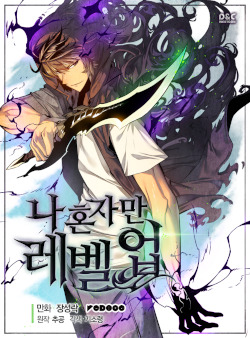
Solo Leveling the anime became the most-watched show in Crunchyroll’s history as of March 2025. Season two’s premiere drew 129,000+ likes in its first 24 hours — the most-liked premiere in Crunchyroll’s history. It became the first anime to cross 900,000 user ratings with a 4.9-star average, and swept Anime of the Year at the 2025 Crunchyroll Awards.
That’s one manhwa. The pipeline has plenty more. Netflix’s Sweet Home — adapted from the Naver webtoon of the same name, which itself logged 2.1 billion cumulative net views — drew 22 million viewers in its first four weeks and was still racking up 43.8 million hours watched in 2025, putting it among the year’s top-five horror TV shows globally. The K-drama of True Beauty, four years after it aired, still pulled 293.5 million hours in the first half of 2024 alone. Lookism got a Studio Mir anime on Netflix. The Beginning After the End finished its first anime season in 2025 and returned for a second in April 2026.
What’s notable isn’t that a manhwa got adapted. It’s that the adaptations are, at this point, outperforming the originals they used to be compared to.
Where to start
If you haven’t read any of this yet and want an honest short list, these are the places I’d begin. Not because they’re the most famous, but because each one shows a different thing the format does well:
- Lore Olympus, Rachel Smythe — The Persephone retelling. If you only read one, this one. Free on WEBTOON; three print volumes so far.
- The Remarried Empress, HereLee — A perfect gateway to the reincarnation-isekai subgenre. An empress whose husband is about to divorce her for a concubine decides, calmly, to remarry an emperor in the next country over.
- Omniscient Reader’s Viewpoint, singNsong & Sleepy-C — If you liked Solo Leveling but want something denser, weirder, and built around a reader who knows the book he’s trapped inside.
- Why Raeliana Ended Up at the Duke’s Mansion, Milcha & Whale — Shorter than the others, self-contained, and the most beautifully drawn entry-level romance fantasy.
- Sweet Home, Kim Carnby & Hwang Young-chan — The horror pick. Read it before or after the Netflix adaptation; it is very much its own thing.
Most of these are free, chapter by chapter, on the official platforms. The ones that aren’t have English print editions now, which is its own quiet milestone.
How do you keep track of dozens of ongoing manhwa?
One thing every long-time manhwa reader learns, usually the hard way: the platforms are not a library. Webtoons, manga, anime, light novels — your history of everything you’ve read and watched and loved is scattered across four or five apps you don’t own. Sites close. Licenses expire and chapters vanish overnight. Accounts get banned. A service you’ve trusted for years rebrands, migrates, or quietly loses the rights to the title you were halfway through. Your list goes with it.
For years I kept my own list in a spreadsheet. I hated it. Columns that never fit the question I was asking. Sorting that broke whatever I’d tagged. Adding a chapter meant finding the right row. Looking for a title six months later was a small, recurring punishment.
Eventually the spreadsheet was inconvenient enough that I built my own solution. That’s what ManiShelf is — a small Mac, iPhone, and iPad app for the catalog, not the content. It doesn’t store chapters or pages. It stores a card for each title: description, characters, your own notes, your score, and the shelf you’ve put it on: backlog, currently reading, up next, finished, or any category you want to make. The data lives on your device. If a platform disappears — legal, illegal, or somewhere in between — your shelf is still there, because it was never on the platform to begin with. No accounts, no subscriptions, no tracking. If you’d like to take a look, the app lives at oitoana.dev/manishelf. I also compared the other Mac trackers I considered. Short version: none of them fit.
Common questions
Is manhwa the same thing as manga? No. Manhwa is the Korean word for comics; manga is the Japanese word. The cultural conventions differ too — most modern manhwa are drawn vertically for phones, in full color, read left-to-right, and distributed chapter-by-chapter on platforms like WEBTOON, LINE Manga, Tapas, and Lezhin.
Why is manhwa suddenly everywhere in 2026? A decade of platform investment matured at the same time as a wave of adaptations. Solo Leveling is now Crunchyroll’s most-watched anime of all time; Netflix’s Sweet Home drew 22 million viewers in its first month; and KOCCA reports Korean webtoon industry revenue roughly sextupled between 2017 and 2024.
Is most manhwa free to read? Legally, a lot of it is — WEBTOON, Tapas, and LINE Manga publish most chapters free with ads, then charge for early access or the most recent chapters. The unauthorized market is also enormous: KOCCA estimated illegal webtoon distribution at 721.5 billion KRW in 2023 alone. Reading on the official apps is how creators get paid.
Who is reading all of this? The most rigorous survey we have (Cho & Adkins, 2025, n=1,117) found 76% of webtoon readers are between 18 and 33. Platforms don’t publish exact gender splits, but the romance genre (the dominant segment) and community evidence both skew female.
- Anastasiia